

A website isn’t just a digital brochure. It’s the place where first impressions turn into trust, and trust turns into action.
Even the best product or service can lose potential customers if the website doesn’t clearly communicate who you are, what you do, and why someone should choose you.
1. Clarity Is Key
Your website should answer three essential questions immediately:
- What do you do?
- Who do you help?
- Why should I trust you?
Without clarity, visitors leave. Even subtle confusion can reduce conversions.
A strong visual identity forms the foundation of a website that converts. When your branding consistently carries from your social media and offline presence to your website, visitors immediately feel familiarity and trust.
2. Simple, User-Friendly Navigation
Visitors shouldn’t have to guess where to click next. Navigation should be intuitive:
- Group similar pages together
- Make important pages easy to find
- Avoid overwhelming menus
A smooth user experience helps guide visitors to the actions you want — whether that’s booking a service, signing up for a newsletter, or making a purchase.
3. Mobile Responsiveness
More than half of web traffic comes from mobile devices.
If your website isn’t mobile-friendly:
- Pages may load incorrectly
- Buttons may be hard to click
- Visitors may leave frustrated
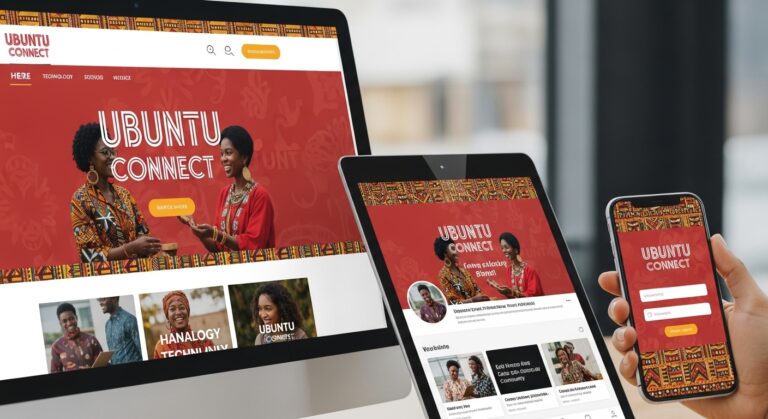
A responsive design ensures your audience has a seamless experience across all devices, keeping them engaged and more likely to convert.
4. Conversion-Focused Design
Your website design should guide visitors toward action without being pushy.
- Clear calls-to-action
- Visual hierarchy that highlights important information
- Fast-loading pages
Many businesses underestimate how much design impacts behaviour. Even small improvements, such as a stronger call to action or a clearer layout, can drastically improve results.
5. Integration with Social Media
Your website doesn’t exist in isolation. Visitors often arrive via social media, ads, or search.
Social media can generate awareness, but your website is where trust is solidified and decisions are made. Ensuring your social media presence aligns with your website creates a seamless customer journey.
6. Test, Improve, Repeat
Websites aren’t static. You should continuously:
- Analyse which pages perform best
- Identify where visitors drop off
- Test different layouts or calls-to-action
The goal is to reduce friction and make it easier for visitors to engage.
True impact happens when your website, branding, and social media work together consistently.
Final Thoughts
Your website is the hub of your business online. It’s where clarity, design, and strategy intersect.
By aligning your website with your visual identity, social media, and overall brand messaging, you create a consistent experience that builds trust, strengthens credibility, and drives conversions.
Remember: small, intentional improvements often have a bigger impact than a complete overhaul. Start with clarity, usability, and consistency, and the results will follow.